Book Three of the Soil and the Seed Trilogy
Two questions have already been answered. Can it be done? Yes. Will it spread? It did. Now comes the hardest one of all: can it hold?
What the Root Held closes the trilogy a full generation later. The reset is no longer a revolution — it’s the world people were born into. There are adults now who never knew anything else, who have to decide whether to tend what their grandparents built, quietly take it apart, or even understand why it was ever necessary. That, it turns out, is the question every generation actually faces.
The story moves between two women. Nora Calloway, now the most-cited chronicler of the whole forty-year arc, sits down to write the retrospective that gives the book its name. And Naomi, a child of the system — raised inside the very institutions the first book invented — finds herself at the center of a national referendum on whether to strengthen the floor or let it quietly erode. The vote comes down to a handful of points. A twenty-one-year-old calls her mother to say: I voted for the floor. The inheritance generation chooses it again.
It builds, inevitably, toward a single morning the reader has been waiting for since the very first page of Book One: July 4th, 2066, the National Mall, a journalist reading a dead architect’s letter aloud to a country that is — partially, imperfectly, still arguing about it — different because of what one man built in one room forty years before.
It isn’t a tidy ending. It’s a horizon. A story about what we leave behind, what the next generation does with it, and whether the things we plant are strong enough to outlive us.
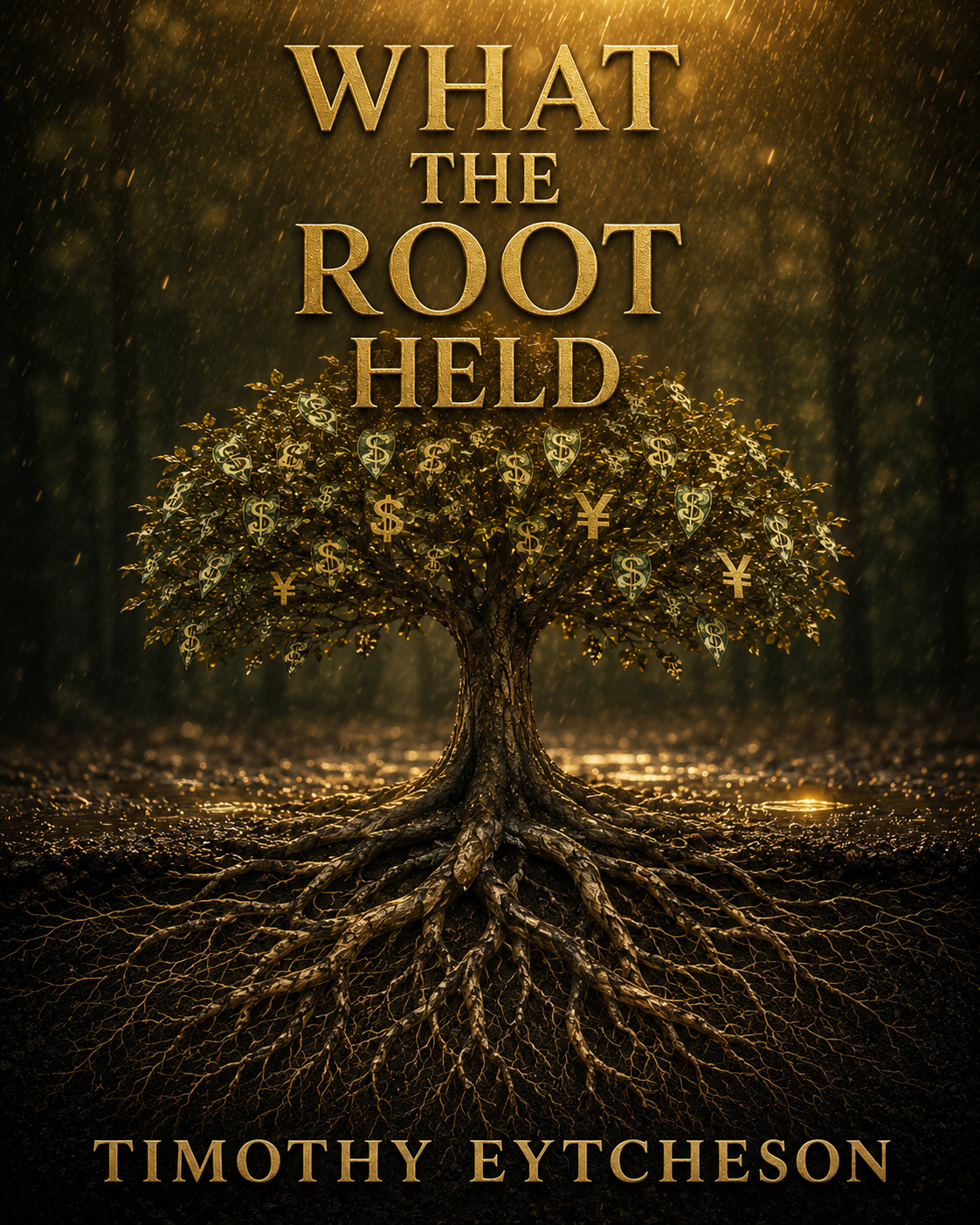
Wealth is the seed. The system in which it grows is the soil. This is the book about what the root held.
The story is fiction. The question is not.
Leave a Reply