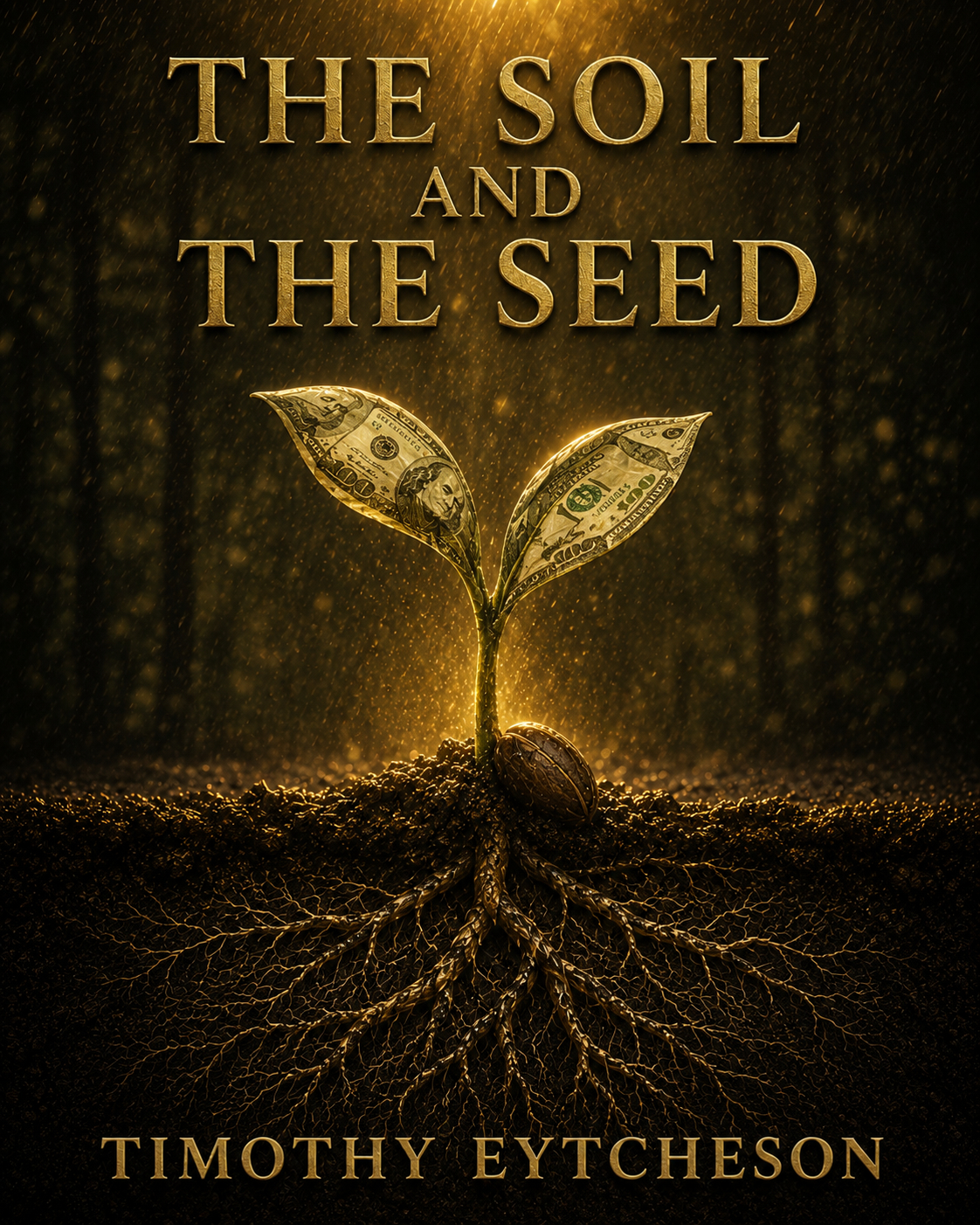
Book One of the Soil and the Seed Trilogy
What would you do if you could?
On inauguration night in 2026, a one-term, one-purpose president activates something his oldest friend spent thirty years building in secret: a Constitutional Convention. Two hundred and forty-six ordinary Americans — a Kansas history teacher, a retired Alabama pastor, a corn farmer from Iowa, a family court judge from Oregon — are selected by algorithm, sequestered in Washington, and handed the one question the country has argued about for generations but never actually answered.
What kind of nation do we want? And what are we willing to do to get there?
Over six months behind sealed doors, they debate and ratify sixteen amendments — healthcare, term limits, gun registration, Supreme Court reform, a woman’s right to choose. Then they face the hardest measure of all: the Ten Lifetimes Initiative, a one-time wealth restructuring engineered so precisely that by the time the country learns what’s happened, it’s already done.
But this isn’t a novel about policy. It’s a novel about people. A tech CEO who loses everything above the threshold and spends the remainder fixing water mains. A steelworker who lost $194 million and chose to fight the method, not the principle. An ER doctor whose patient can finally afford to come back. And, forty years later, a journalist standing on the National Mall, reading a dead man’s letter aloud — about seeds, and soil, and what we leave for the people who come after us.
Wealth is the seed. The system in which it grows is the soil.
It’s been compared to Allen Drury’s Advise and Consent for its political machinery and Kim Stanley Robinson’s The Ministry for the Future for its scope — but it reads like a thriller and lands like a sermon, told entirely through human beings sitting at kitchen tables where the numbers never quite add up.
It’s the story of a country that decided to try to fix itself. Not perfectly. Not without cost. But in the way that mattered.
The story is fiction. The question is not.
Leave a Reply